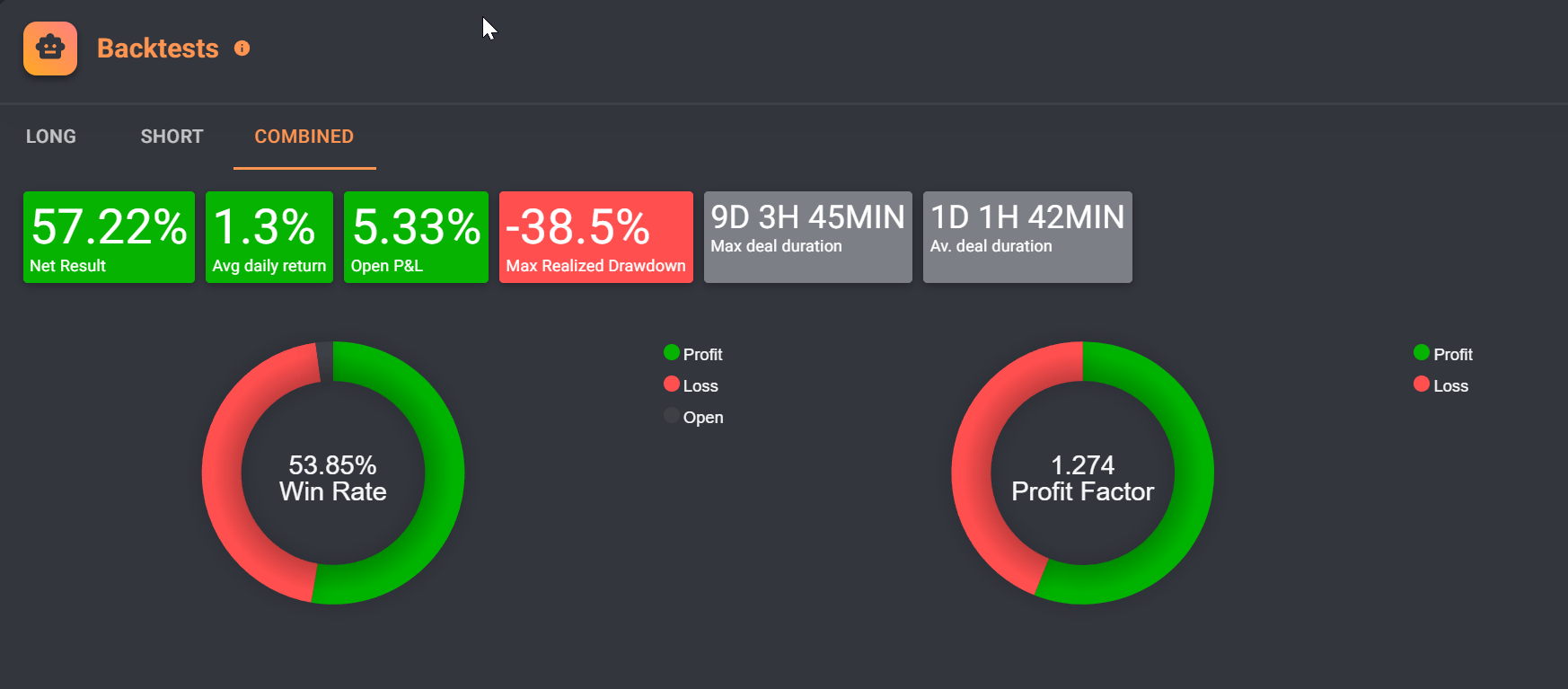
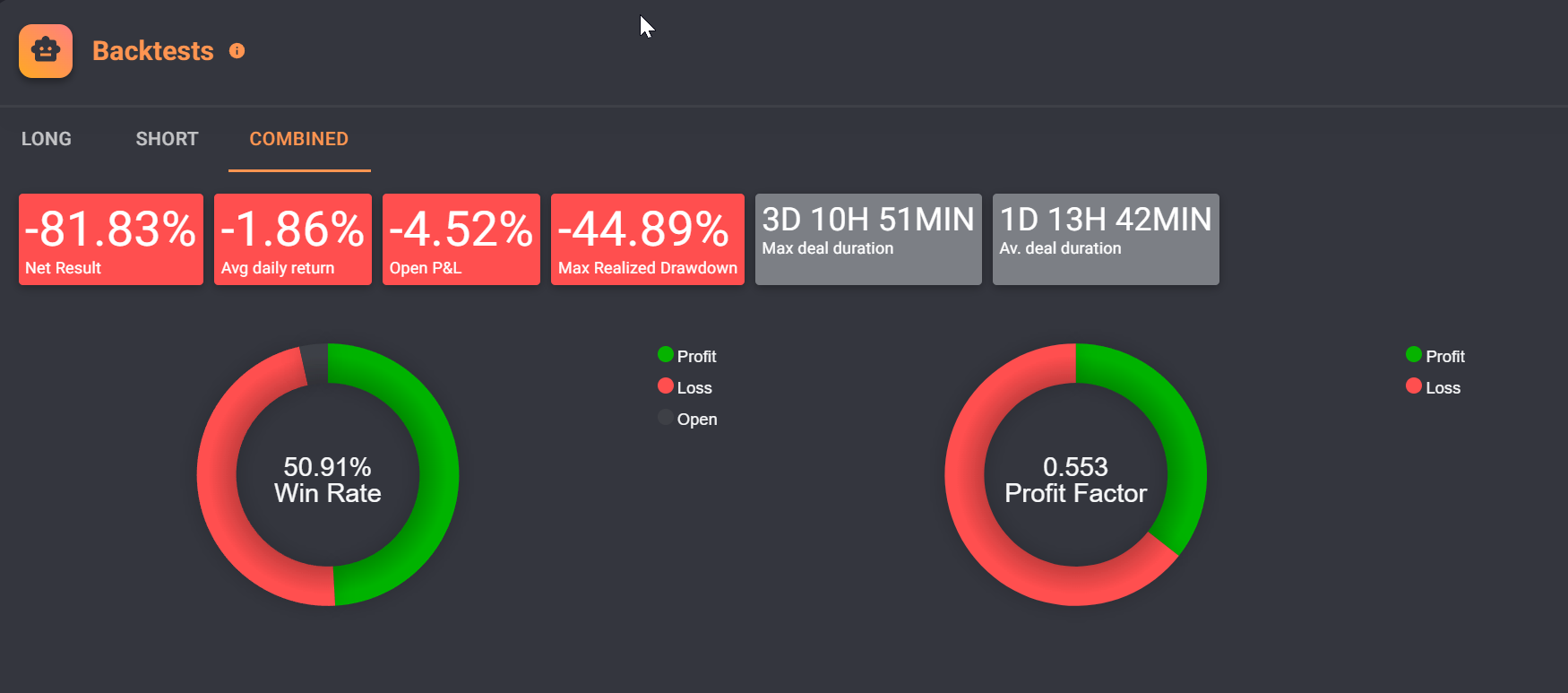
I did a backtest with a paper trading strategie with two different paper trading accounts. One is on Binance Futures and one on Bybit Futures. The Results with the strategy are completly different. I think one of those backtests is a bug.
Hi @MarkusP — thanks for the report and the screenshots.
One important thing up front: a backtest replays each exchange’s own historical market data. Binance Futures and Bybit Futures are independent markets with different price history, different amounts of available history, and different funding/fill behavior, so running the same strategy against each one will naturally produce different results — that on its own isn’t necessarily a bug.
That said, a completely different outcome can also mean one exchange had limited or incomplete history for the pair you tested, which would make that run unreliable. To tell which case this is, could you help me with a couple of details:
Which result do you believe is wrong — Binance or Bybit — and what specifically looks off (final profit, number of deals, the equity curve shape)?
What pair did you test, and what exact date range did each backtest cover? (If one range is much shorter than the other, that usually explains it.)
With that I can check whether both runs had full data for that pair and period, and confirm whether one is genuinely misbehaving. Thanks!
I sent you the link to the strategy, there you can see the Pairs.
I did test the exact same timeperiod. it was from 1.6.2026 to today which is not a long time and the exchanges should have enough data for that. I did the tests with several coins and the results look always the same. Binance is very good, bybit is very bad and I can not tell you witch one is correct
What Claus said it’s essentially right, and the variance compounds. Even if the variations between them are small, just a deal starting in a little different time can cascade down and produce completely different results, as all subsequent deals start at different times. That said, it can also be a bug. However, tracing the variations it’s a time consuming task that we can’t do pre-emptively. In this cases, since you are more familiar with the strategy, if you can point us is a more specific direction about what may have gone wrong, we can take a closer look.
Luckily now we have more powerful AI, and it looks like it was able to run the backtest in the background while I was replying you and noticed a possible source of bug in bybitlinear specifically. Will post here the result.
Your intuition was right, @MarkusP — the issue is on the Bybit (futures) side: we confirmed a data-quality problem in the historical candles used for those backtests, which was skewing the Bybit results specifically (your Binance runs were unaffected). It’s not that one strategy is “wrong” — the Bybit backtests were being fed bad input data. A fix is already in progress, and we’ll update this thread once it’s live so you can re-run your tests. Thanks for the clear report and screenshots — they made this much faster to pin down.
Update, @MarkusP — the fix is now live. The problem was on the Bybit futures side: the historical candle data feeding those backtests contained duplicated bars for certain pairs (e.g. WLD), which caused the engine to double-count price moves and produce systematically worse Bybit results — while your Binance runs were unaffected. That bad input has been corrected. Please re-run your backtests on Bybit futures now; they should line up much more closely with Binance for the same strategy and period. Thanks again for the clear report and screenshots — they made this quick to pin down. Let us know if anything still looks off.